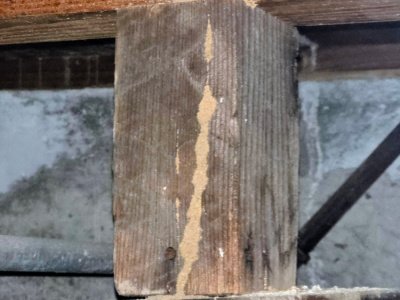
 I recently inspected a home in San Diego where the homeowner was convinced fumigation was necessary. She wanted to move quickly, so I rearranged my Monday schedule to make the first available fumigation date that Friday.
The home had experienced a major plumbing failure that resulted in flooding. All of the flooring had been removed down to the floorboards. The homeowner told me that one of the exposed floorboards was completely infested with termites.
Typically, when termites reach the floorboards, fumigation is warranted. It’s similar to opening up a wall and finding termites in the wall studs. That kind of infestation doesn’t happen overnight—it takes years. And if it’s in one section of framing, it’s usually elsewhere too. Because that wood is inaccessible, fumigation is often the correct solution.
The homeowner explained that they moved into the house nine years earlier and, for some reason, waited until after moving in to fumigate. It never made sense to her. She wondered why they hadn’t just tented the house before they moved in.
When I examined the damaged floorboard, it didn’t look like a drywood termite infestation. The wood was packed with dirt and termite droppings. I saw the same thing on a damaged patio post near the front door.
In the attic—oddly placed and not where it should have been—I found a fumigation tag dated 2019. Her memory was slightly off. They hadn’t fumigated right after moving in; it was a few years later. And if they fumigated six years ago, there’s a good chance they don’t need to fumigate again now.
Many termite inspectors don’t look for fumigation tags. Sometimes it’s better not to know. Fumigation is easy to sell. You measure the house and you don’t worry about accessing every tight area or probing vulnerable framing because “fumigation gets everything.”
I crawled the entire attic, which wasn’t easy. Skipping this step is another shortcut for a less thorough inspector trying to justify a fumigation. I found no termite droppings. When someone believes they need to fumigate but there are no droppings in the attic, I’m far more comfortable recommending alternatives. Next to eaves, attic framing is some of the most vulnerable wood in a home.
This house had a raised foundation. Crawl spaces are a termite inspector’s least favorite place to inspect. Attics can be dirty, but crawl spaces are something else entirely. You’re not really crawling—most of the time you’re on your stomach, pushing yourself along with your elbows, thighs, and feet. Once you’re deep in, it’s hard not to think about how there’s no quick way out if something goes wrong.
I’ve worked with inspectors who won’t even enter a crawl space. They squat, shine a flashlight inside, and call it good.
If you’re fully committed, you suit up. I did. It was a large crawl space with tubing and obstructions everywhere. I made my way to the center, where the restoration company had placed drying fans. This was the area most affected by the flood.
Dead center in the drying mud was a pier with a mud tube running straight up to the floorboard.
This wasn’t drywood termites. It was subterranean termites.
Fumigation wouldn’t help.
If you’re dealing with a termite issue, you generally have two choices: call a large company whose inspectors are often overbooked and incentivized to take the fastest path to a sale, or call someone whose primary goal is to actually solve the problem.
How do you know the difference? Read the reviews. There’s more information available than ever. The last thing you want to assume is big company, big assurances—because that simply isn’t the truth.