 If I’m inspecting a home for termites and the homeowner tells me they’ve been trying to handle the problem themselves with over-the-counter sprays or foams, I already know one thing—the problem got worse, not better.
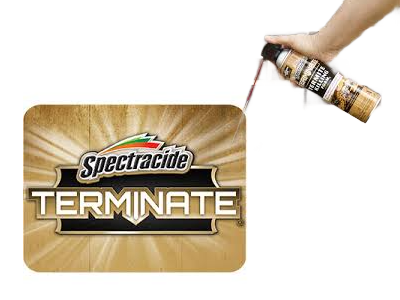
Even if they don’t mention it, but I spot a can of Terminate sitting in the garage, I know I need to look beyond the obvious damage. There’s a good chance the real activity has been pushed somewhere harder to find.
I don’t offer general pest control services, but I work closely with people who do—and they see the same pattern. Their stories usually involve an ant problem that spiraled out of control after a homeowner tried to fix it with store-bought pesticides.
The issue comes down to a disconnect between what people expect and what actually works.
When you spray a bug, you want immediate results. You want it to stop, twitch, and die on the spot. If it doesn’t, most people keep spraying until it does. There’s also a common belief that if it smells strong, it must be effective. If it has no odor, it feels like it’s not working.
But that thinking works against you.
Most over-the-counter pest control products are designed to kill what you can see. Meanwhile, the real problem—the colony—is hidden. Think of it as an insect factory running 24/7, producing more pests. Unless you eliminate the source, the problem doesn’t go away. It grows.
With termites, it’s even worse.
You might kill a handful of worker termites, but the rest of the colony detects the treated area and avoids it. If you sprayed an exposed piece of wood, they’ll simply relocate—often deeper into the structure, like inside your walls. What could have been a small, localized treatment can turn into a full fumigation.
Professional termiticides work completely differently. They’re undetectable to termites and don’t kill on contact. Instead, termites pass the material back to the colony through feeding and grooming. Because termites are communal insects, this allows the treatment to spread and eliminate the source. These products also provide long-lasting protection, remaining effective in the wood for years.
Even if over-the-counter products had that kind of residual, it wouldn’t matter—termites can detect them and will avoid the area entirely.
My company maintains hundreds of homes under full-structure termite warranties. If a customer notices anything suspicious, we come out and treat it as part of that warranty. If I were limited to the products sold at big box stores, I’d be responding to constant callbacks—and I wouldn’t stay in business very long. Instead, those calls are rare.
I understand the homeowner mindset. For many people, termites mean one thing: tenting. You see droppings, and suddenly you’re bagging food and planning to leave your home for three days. Faced with that, it’s tempting to try the $7 solution first.
But that “quick fix” often leads to the outcome homeowners were trying to avoid in the first place.
The termites aren’t eliminated—they’re displaced. The infestation spreads into inaccessible areas, and now fumigation becomes the only real option.
In many cases, if the issue had been addressed early with professional treatment, it could have been handled in a far less invasive—and less expensive—way.
If you see signs of termite activity, don’t wait. The sooner it’s addressed, the less damage you’ll have, the simpler the treatment will be, and the more options you’ll have to avoid major disruption to your home.