 You think you have termites. You schedule an inspection with a local termite company. The inspector arrives carrying a clipboard or a tablet. There’s a greeting, maybe some back-and-forth about your house and its termite history. You show the inspector what’s going on and explain why you called.
Then the inspector gets quiet, and their face is buried in said clipboard or tablet. You might hear them counting their steps or see them reading the display on a measuring wheel. They’ll look at your roof, your siding, and make note of where they placed their inspection tag.
There are two things a termite inspector does when they inspect your home: inspect your home and create a termite report.
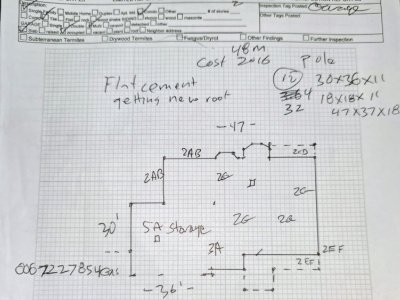
The first step is to diagram your home. That’s pretty simple if you live in a tract home and every angle is 45 degrees. It’s a lot more complicated when your architect wanted to get fancy and made your home resemble a bow and arrow. Or if you live in Rancho Santa Fe and your home is the size of five average homes.
If tenting seems to be your only option, the inspector can no longer rely on counting steps. They’ll want to be as accurate as possible, so that’s when you’ll see the measuring wheel. Is the house on a raised or slab foundation? Does it have a composition shingle roof or tile? Is the tile concrete or clay? Are there vines growing up a wall? What’s the gas meter number? Is the detached garage on a property line? If a home requires fumigation, those details are key.
A termite report is a snapshot of the condition of your home. Hopefully, your inspector was thorough and detailed. If not, termite damage and evidence won’t be logged. If so, termite damage and evidence could be mistaken for new evidence in the future.
The termite report is also the game plan for the termite technicians completing the treatment. Just knowing whether the home is one or two stories tells the technicians whether they need a two-story ladder and ladder support. Termite technicians aren’t inspectors, and they don’t have time to reinspect the home before completing a treatment. If something was missed or left off the report, it won’t be addressed.
That’s why it’s important that the inspector’s diagram actually resembles your house. It should be as detailed as possible.
If a rafter tail is infested, is it on the first or second story? Is it behind or in front of the side gate? Behind or in front of the chimney? Is it above a patio cover or a roof line? How will it be reached? Is there a shed, vegetation, or storage items where the technician would place their ladder?
How many attics exist? Technicians assume there will be one attic, but when there are multiple attics, they need to be on the diagram.
How many spots of termite activity were located in the attic? Approximately where are they? What size attic? How much borate will be needed? Some attics are difficult to circumvent. These details can make the termite technician’s job easier and help ensure a more complete treatment.
Termite reports aren’t just shared with termite technicians. Typically, a clerical person needs to replicate the report electronically.
Next week: How does the inspector’s handwritten report end up in your email inbox?