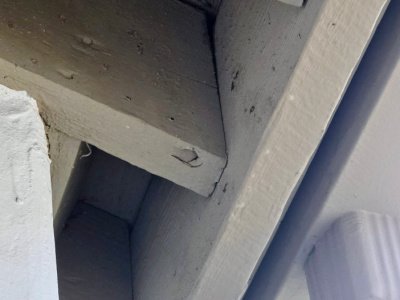
 Termite-Damaged Wood
One of the steps in inspecting a home for termites is probing the wood. I use a painter’s pole, with one length for the first story and a longer one for probing the second-story eaves. I hit the wood with a fair amount of force. (I’m surprised my right shoulder isn’t twice the size of my left.) If the wood is free of termites and fungus damage, nothing will happen. But a board that looks perfectly fine can suddenly burst open under the force of a blow, releasing a shower of termite droppings.
There’s no reason to probe wood with obvious fungus damage because the damage is already visible. Sometimes, though, I’ll give it a light tap just to see if any termite droppings spill out.
Homeowners often ask whether they need to repair termite- and fungus-damaged wood. If the home is being sold, the answer is almost always yes. If the homeowner isn’t going anywhere, the decision is theirs.
After paying a fair amount for termite treatment, a homeowner might be less motivated to spend even more money repairing the damaged wood. On top of that, the wood repair industry has so many layers of contractors and subcontractors, licensed and unlicensed, that prices can vary by thousands of dollars.
More than half of my customers leave their damaged wood as is. This might be fine as long as they remain our customers. We can refer to previous termite reports to help determine whether the damage is old or new. But if a homeowner lets their termite warranty expire and only deals with termite issues as they arise, they could end up spending more on redundant termite treatments than it would have cost to repair the wood in the first place.
You might convince yourself that you’ll remember all the spots in your home’s eaves where termites caused damage. Let me tell you something: people seldom remember the last time they tented their homes, even with all the hassle involved. When it comes to remembering dates, here are the top five things homeowners remember:
- The year they moved in.
There is no second through fifth. That’s about all most homeowners remember.
I’m writing this because, unless you’re okay with inspectors dissecting your wood, we often can’t tell whether the damage is the result of an active termite infestation or an old one. Even if an inspector sees drill marks left over from a previous localized treatment, there’s no way to know whether the applicator used the correct chemicals or followed the proper treatment technique.
Many of us offer full-structure warranties, so it’s in our best interest to treat every potential trouble spot. From our perspective, if we find termite-damaged wood, we’ve found termites.
Here’s how the cycle can play out: You discover termite activity, schedule an inspection, pay for treatment, leave the damaged wood unrepaired, and let your termite warranty expire. A few years later, you discover more termite activity, schedule another inspection, and pay to have both the newly damaged wood and the old trouble spots treated again. Every few years, the problem areas expand, and the cost of treatment grows.
Because of this, I recommend that every homeowner have their termite- and fungus-damaged wood repaired. Finding the right company to do the work is another challenge, believe me. So, if you find someone who is qualified, dependable, and reasonably priced, hold on to them like a dog holds on to its owner.