 If you don’t want to tent, it’s important that your termite inspector inspect every accessible part of your home. But inspectors can be pressed for time because they’re overbooked, it’s been a long week and they’re tired, or the company they work for doesn’t offer a comprehensive alternative to fumigation. In some cases, the only way they’ll make their sales quota is by selling a fumigation.
These are the areas that sometimes get skipped:
Attics
This can be as much on the homeowner as the inspector. Twice last week, customers told us they didn’t want us to inspect their attic. Tell that to ten inspectors, and nine will probably shrug their shoulders and be happy to skip it.
That’s because inspecting an attic isn’t normally fun. It’s dirty and hot, and you’re likely to hit your head on a nail or rip your favorite work pants on a truss tie. But, like I always say, skipping the attic is like getting a physical and having the doctor not check your heart.
When a customer tells me they don’t want us to inspect their attic, they might claim it’s too tight or that a family member is working in the room where the attic access is located. I have to be a little nuanced. I’ll ask them again whether they want to tent. If the answer is no, I’ll explain how critical it is to inspect the attic. It’s a vulnerable area with plenty of exposed wood.
If I can’t inspect an attic, the only way I can offer a full-structure warranty is if we fumigate. By the way, whenever someone tells us their attic is too tight, we usually get in without a problem and find a pretty typical attic space.
Crawl Spaces
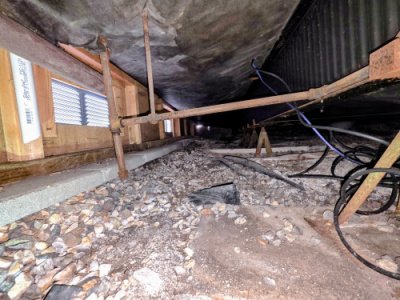
I’d guess that half of inspectors skip the crawl space. Crawl spaces make attics seem clean and spacious. They’re almost never fun. If they’re damp, the moisture penetrates your coveralls and leaves you soaked. If you find termite activity, it’s almost always at the far end or on the other side of some scary opening you have to crawl through.
There’s a lot of information to be gleaned from inspecting a crawl space, but some inspectors just don’t care, and homeowners can feel guilty insisting that the inspection be done.
Garage Rafters
Inspecting garage rafters is like inspecting an attic with no floor. It can be unnerving to crawl from one board to the next with nothing in between. But unless you get up there, you could miss termite activity hidden above your line of sight.
Many times, a garage is too full of stuff to allow you to move a ladder from one section to another and see everything. When it’s possible, the best way to inspect it is to climb up and crawl across the rafters.
Roof Lines
Eaves aren’t always accessible. Sometimes they’re above patio covers or other roof lines. Unless your inspector is willing to haul a ladder from one section of the home to another, a pile of termite droppings might be missed.
I don’t know how many times a patio cover prevented me from probing the eave wood above it. But when I climbed up on my ladder and looked on top, I found termite droppings coming from the eaves above. Then you have to determine whether there’s any way to reach that wood to treat it.
Failing to discover that activity can allow a minor infestation to become a major one, resulting in a lot of wood damage.
Under Decks
Much like crawl spaces, this is a no-fun zone. But decks are usually made of wood, and wood attracts termites. Even Trex decks have wood framing.
It doesn’t help that gravel is often used as ground cover under decks, making crawling around even more uncomfortable.
Cabanas, Sheds, Detached Pergolas and Trellises
Usually, you’re going to have to ask your inspector to include these structures in the inspection. They’re not particularly difficult to inspect, but they can be time-consuming.
Don’t Turn a Blind Eye
If your goal is not to tent, a termite inspector needs to inspect as much of your home as possible. If you tell most termite inspectors they don’t need to inspect the attic or some other area, they’ll be happy to skip it.
But turning a blind eye to inconvenient areas won’t solve your termite problem. It can only make it worse.