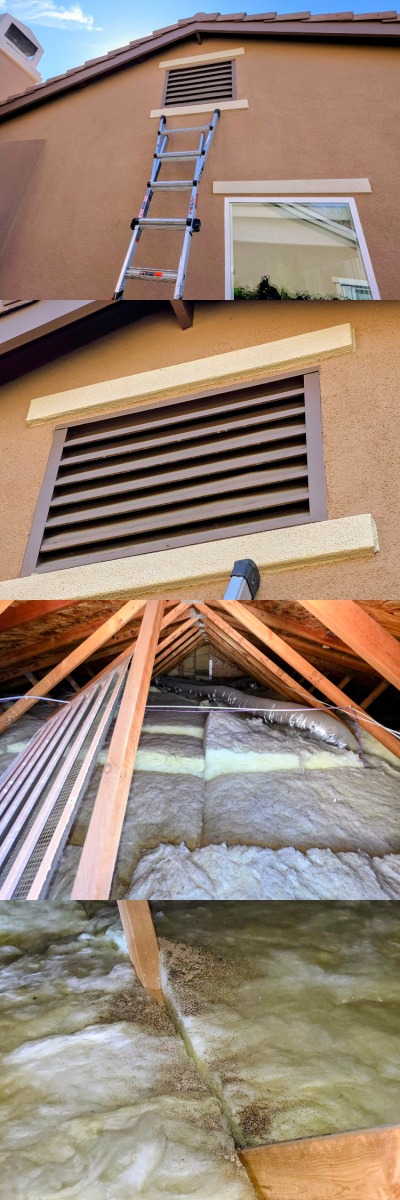
 I was recently conducting a termite inspection in Carlsbad. Before I begin any inspection, I ask the homeowner a few questions: What are you seeing? How long have you lived here? Was the home tented before you moved in? Have you experienced any termite swarms? And how do you feel about fumigation?
If a homeowner is firmly against tenting, I need to know that upfront. When fumigation isn’t an option, it becomes critical that I locate every single area of termite activity. This particular customer did not want to tent.
When I asked about attic spaces, he showed me one above the garage and mentioned another upstairs.
I typically start my inspections on the exterior. I diagram the home, then probe the first-story eaves, followed by the second story. While examining the fascia and rafter tails along the perimeter, I noticed three large vents on the first floor.
Some homes have enclosed framing pockets between floors or above ceilings. They’re usually sealed behind drywall, but if you could open them up, they would look just like an attic—exposed studs, framing components, and insulation. These areas can be problematic when it comes to termites because the wood inside is often inaccessible for localized treatment.
For example, if a homeowner experiences a swarm in the kitchen and it appears the termites originated from framing between the first and second stories, there’s often no practical way to access that void. In many cases, fumigation becomes the only realistic solution.
But in this situation, the vents caught my attention. They suggested there might be access to what would normally be a sealed space. I grabbed my ladder and took a closer look. As expected, I found a small screw securing each vent. After removing the screws, I pulled off the vents—and there they were: attic spaces.
This customer didn’t have two attics. He had five.
Had I not been curious, I could have easily overlooked those hidden spaces. That would have left a significant amount of exposed framing—accessible to termites through the vents—uninspected and untreated. I ended up finding termite activity in two of the hidden attics.
The experience reminded me of a time when I worked for another company. I was inspecting a long-time customer’s home and noticed a ladder leaning against the house, leading up to a flat section of roof. On impulse, I climbed up and walked across the roof. Halfway across, I saw a small door built into a raised section.
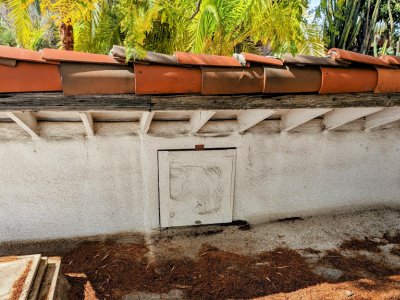
When I opened it and looked inside, I found an attic packed with termite droppings. From what I could tell, it had never been inspected. The homeowner didn’t know it existed. The company had been servicing the home for years, and no one had ever discovered it.
Quite frankly, many termite inspectors look for reasons not to inspect attics. They’re difficult to access. Portions may be tight or obstructed. Sometimes the assumption is that the house will just need to be tented anyway. Sometimes they simply don’t know the space exists.
Not me.
It may sound strange, but I like inspecting attics. And if I’m going to offer alternatives to fumigation, it’s essential that I find and inspect every attic space in a home.
Because you can’t treat what you don’t find.