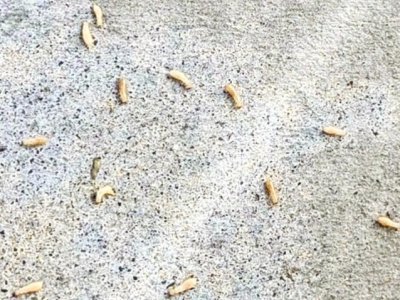
 If you ever looked closely at a worker termite, you’d probably wonder how something so small and soft—something you could crush between two fingers—can destroy solid wood.
The hardest part of a termite is its jaws. Unlike human jaws, which move up and down, termite jaws move side to side. They use sharp front edges to scrape off tiny bits of wood, then grind those particles down further with their version of molars before swallowing them. Before the material reaches the gut, it passes through the proventriculus, where it is processed even further.
Once that wood pulp reaches the termite’s stomach, the termite needs help. Termites cannot digest wood on their own. They rely on single-celled organisms called protozoans that live in their digestive system. These protozoans break down cellulose in the wood into usable nutrients the termite can convert into energy.
Termites are not born with these protozoans. Young termites receive them from older termites through feeding. Adult termites regurgitate partially digested food to the young, and juveniles may also consume droplets from the adult termite’s hindgut. This transfers the microorganisms needed to fully digest wood.
The presence—or absence—of protozoans is one reason two common termite control methods work so well.
If termites were born already carrying protozoans, fumigation would be far less effective. Fumigation gas does not penetrate termite eggs, so eggs can survive treatment and later hatch. But the newly hatched termites emerge without the gut organisms they need. Without access to a colony to pass them along, they cannot digest wood and won’t survive.
Borate treatments work differently. Borates disrupt or kill the protozoans living inside the termite’s gut. Without those organisms, termites lose the ability to digest wood and eventually die from starvation.
If you ever took biology in school and wondered when it would matter in the real world, the people who developed termite treatments were probably paying attention. Understanding the biology of termites—and the organisms they depend on—is what made effective control possible.
I didn’t do especially well in biology myself, and I still sometimes wonder how such soft little insects can chew through a rafter tail in less than a year. But they can—and dealing with that reality is how I make my living.