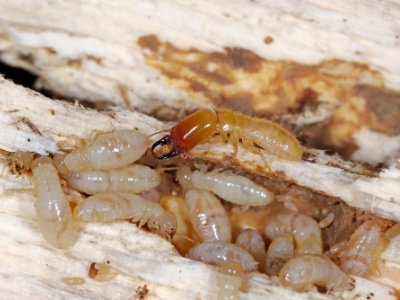
 If termite control were a movie, drywood termites would be the star. They are the most common termites in San Diego, where the climate is especially favorable to them thanks to mild temperatures year-round and just the right amount of moisture.
A drywood termite colony is made up of several castes. Nymphs, the immature termites, do the chewing, feeding, and grooming of the queen and soldiers. Soldiers defend the colony from invading ants. Reproductives are released in the fall to start new colonies. And the queen, of course, is in charge of it all.
Drywood termites live entirely inside the wood they infest. As the colony grows, they need more room, so the nymphs push their droppings out through small openings in the wood called kick-out holes. If drywood termites ever found another way to dispose of their droppings, they might take over the world—because those droppings are often what give them away. Many termite inspections begin when a homeowner discovers what looks like a pile of sawdust somewhere around the house.
Drywood termites are the reason fumigation exists—the most visible form of termite control. If you have a serious infestation, your neighbors are likely to notice. How could they not with the giant circus tent that suddenly engulfed your home? Your home becomes a death chamber. When you return, everything may look the same, except for the bags of food items left on counters, in cabinets, and inside the refrigerator and freezer.
Drywood termites spread by swarming. Swarming is the most alarming thing about drywood termites. If you ignored the pile of termite droppings that you conveniently disposed of, hoping they wouldn’t return and that the whole thing was just your imagination, swarms are real. Out of nowhere, a hundred flying termites buzz through your dinner party toward your brand-new retrofitted, double-pane windows. That’s when your spouse gives you the “look,” and first thing the next morning, you’re phoning a local termite control company.
Drywood termites are like your kids—you’re never done with them. Unless your home is built entirely of metal with no wood at all, a wood-framed house can never be completely termite-proof. Fumigation kills existing termites but leaves no residual protection behind. In theory, your home could be swarmed again the same day the tent comes down. Spot treatments can leave residual protection in treated wood for years, but only in areas that can be physically accessed.
Drywood termites never sleep. They chew 24 hours a day, 365 days a year. They can devour a rafter tail in less than a year. Some people think, “I’ll just fumigate every ten years,” but the real question is how much expensive wood damage you’re willing to accept in between.
Drywood termites require ongoing protection. Responsible homeowners maintain full-structure drywood termite warranties that include annual inspections, spot treatments when needed, and return visits if signs of activity appear during the year. Warranties help to reduce the amount of expensive wood damage and the need to fumigate. They’re also cost-effective, since homeowners pay one manageable annual fee for continued service.
If you’d like to know more about California Termite’s termite warranties, click here.