 It seems like every time I’m on Nextdoor and someone asks for advice about termites, someone recommends orange oil. Part of the reason is that many people believe orange oil is the only alternative to termite fumigation—which isn’t true. Another reason is the general fear of chemicals and pesticides. Orange oil sounds natural and safe.
Whoever rebranded D-limonene as “orange oil” was a marketing genius. If it went by its chemical name, very few homeowners would even know about it. The name sounds pleasant and non-threatening. For many people, it even evokes nostalgia for the old slogan, “A day without orange juice is like a day without sunshine.” Orange oil appeals to homeowners who are trying to live a healthy, chemical-free lifestyle—something especially common in Southern California.
If orange oil were marketed strictly as D-limonene, it would have to stand on its effectiveness alone, and it would probably be much harder to find. It might occupy the same niche as powdered toothpaste: technically available, but rarely used. But at least powdered toothpaste would offer some benefits.
The problem with orange oil is that it only kills termites on contact. Any termites that are not directly exposed can detect the substance and avoid it—often retreating deeper into the wood. Instead of attacking an accessible section of fascia, the termites may move into a wall and begin feeding on an inaccessible wall stud.
Because orange oil kills only on contact, the termites that die cannot transfer the substance back to the colony. What typically happens is that a few worker termites die, the remaining workers avoid the treated area, and the queen simply produces more workers. Killing termites with orange oil is similar to killing a trail of ants: the visible insects disappear temporarily, but before long a new trail forms somewhere else.
Orange oil also provides no lasting protection. It dissipates in less than 30 days, and even if it remained longer, termites can detect it and simply avoid the treated area. By comparison, a fipronil-based product can remain active in treated wood for up to ten years. Because worker termites cannot detect it, they unknowingly carry it back to the colony, which can ultimately lead to the colony’s elimination.
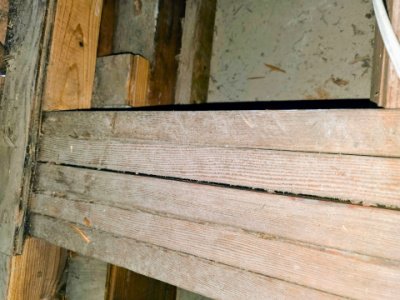 Local treatments involve some guesswork. It’s not always clear where to drill. In an attic or garage, there may be two or three boards stacked on top of each other. If termite droppings are present below, and there isn’t a clear kickout hole, it can be difficult to determine which board is actually infested.
Drilling can help. When the bit suddenly hits a pocket of air, it often indicates a termite gallery. However, when an infestation is new, the wood may still feel completely solid, making the colony harder to locate.
When using a fipronil-based termiticide, missing the exact gallery isn’t always critical. The termites will eventually contact the treated wood and carry the material back to the colony, eliminating it. With orange oil, however, accuracy is far more important. If the gallery is missed, the termites may not be affected at all.
There are also practical concerns homeowners rarely hear about. Orange oil is chemically very similar to turpentine—it is essentially a flammable solvent. Not only can it dissolve termites, it can also dissolve paint on the wood’s surface. When a local treatment is performed with orange oil, a flammable substance is being injected directly into the structure of the home.
From my experience inspecting homes that were previously treated with orange oil, the problem rarely improves. In many cases, it actually gets worse. Homes that could have been effectively treated with a fipronil-based product often end up requiring fumigation later, and by then the wood damage is significantly more extensive. Homeowners find themselves paying for additional treatments and costly repairs that might have been avoided.
Plain and simple, orange oil doesn’t solve termite infestations. Homeowners should approach it with the same caution that termites themselves show—by avoiding it.