 My first interview for a position in pest control was a group interview. There were a dozen of us sitting and standing in a conference room at a branch of a very large pest control company. There were only a couple of openings, so the person in charge began describing the job in the most matter-of-fact way possible: “The job pays (a low amount per hour) plus commission. You’ll be given a company vehicle, and you’ll need to inspect attics and crawl spaces.”
Then the person added, “If that doesn’t appeal to you, you can leave now. No hard feelings.”
I was surprised when more than half the room got up and left. It might have been the low hourly pay or the requirement to sell, but I suspect inspecting attics and crawl spaces was a major factor.
Homeowners sometimes ask me if I need to go into their attic. My answer is always yes. When it comes to termites, the attic is the heart of the home. It’s one of the most exposed and vulnerable areas of a house. The base of an attic is lined with soffit vents, the ends often have gable vents, and the roof has multiple vents and other potential entry points. Inside is a sea of exposed, unpainted wood. Termites spread by swarming, and swarmers can enter an attic through any of these openings. Once inside, they have plenty of unprotected wood to choose from. Anywhere they land, they can potentially start a colony.
Because attics are protected from the weather and few homeowners ever venture into them, they can be the perfect termite crime scene. On the exterior of a house, we probe wooden eaves to find termite damage. We seldom bother looking for droppings because rain, irrigation, and wind tend to remove the evidence. In an attic, however, termite droppings are pushed out of the wood by worker termites and generally remain where they land. There’s no need to probe. All a termite inspector needs is a bright flashlight and the will to go from one end of the attic to the other and everywhere in between.
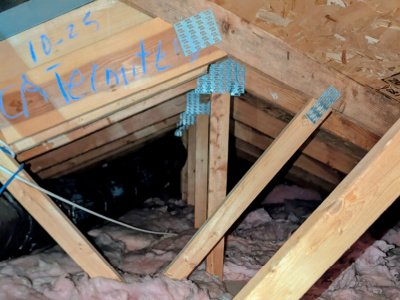
That’s where the challenge begins. I won’t enter an attic without knee pads and a pair of work gloves. Very few attics can actually be walked through. More often, I have to crawl from one rafter to the next, carefully avoiding the nails protruding through the roof above me while making sure I don’t kneel or step anywhere in between.
To add another element of suspense, attic floors are often covered with insulation, which can conceal hazards such as fire suppression systems, areas without proper wood footing, recessed lighting, and who knows what else.
And then there’s the heat. From June through October, attic temperatures can easily exceed 100 degrees. Because of all the hazards, inspectors also need to wear long sleeves, pants, gloves, and respirators, making the heat seem even hotter.
Despite the heat and hazards, I actually look forward to inspecting attics. They provide some of the most valuable information about a home’s termite health, and I enjoy a challenge. At California Termite, we write the company name at the far end of every attic and crawl space we inspect. I have to admit, when I finally reach the end of a particularly difficult section of an attic, I feel a little like Tenzing Norgay planting his flag pole at the top of Everest.
If you suspect you have termites and want a company that will inspect your attic from one end to the other, along with every other accessible part of your home, contact California Termite today.