 When homeowners discover termites in their homes, they often wonder why we build houses out of wood in the first place. It’s a fair question. Considering that termites, fungi, and other wood-destroying organisms are constantly trying to consume the very materials our homes are built from, wood-framed construction can seem like a flawed concept.
And it’s not a small problem. By conservative estimates, there are well over a hundred companies providing termite control services in San Diego County alone. Entire industries exist because wood is vulnerable to attack.
The issue became even more pronounced when builders largely transitioned from naturally termite-resistant redwood to Douglas fir, which is more susceptible to termite activity and fungal decay. While modern construction has evolved in many ways, wood framing remains the standard. Aside from reducing decorative wood features on exterior elevations, most newly built homes are constructed much the same way they have been for decades.
There is, however, a simple solution.
Short of eliminating wood from the construction process altogether, builders could pre-treat structural lumber with borates. If all framing lumber were treated with borates before construction, termites, wood-boring beetles, and many forms of fungal decay would become far less significant concerns in new homes.
Borates work by attacking the biological processes that wood-destroying organisms rely upon to survive. When termites consume borate-treated wood, the borates disrupt the microorganisms in their digestive systems that allow them to break down cellulose. Without the ability to digest wood, the termites eventually die.
Borates are equally effective against wood-decaying fungi. When fungal spores land on treated wood, the borates interfere with the fungus’s ability to produce energy and utilize nutrients. The fungus is unable to establish itself and dies before significant decay can occur.
As long as the treated wood remains relatively dry and the borates are not leached out by repeated water exposure, the protection can last for the life of the wood.
Given these benefits, it would seem logical for borate-treated lumber to be standard in residential construction. Unfortunately, there is little incentive for developers to absorb the additional cost. Most homes are built in large numbers, and builders are focused on keeping construction costs competitive. While some informed homeowners request borate treatments during the framing stage of custom homes or remodels, these projects are the exception rather than the rule.
Fortunately, homeowners don’t have to wait for building practices to change.
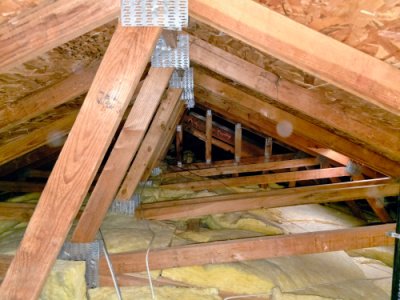
Much of the accessible wood in an existing home can still be treated with borates. Exposed framing in attics, crawl spaces, garages, and unfinished utility areas can often be treated long after construction is complete. In many cases, areas that cannot be reached by hand can still be accessed using specialized spray equipment capable of reaching ten to twelve feet into otherwise inaccessible spaces.
Treating exposed, unpainted wood with borates won’t eliminate the possibility of termites altogether. Some areas of a home simply cannot be accessed without opening walls or removing finishes. However, reducing the amount of untreated wood available to termites can significantly lower the likelihood of widespread infestations and may help homeowners avoid more extensive treatments in the future.
Southern California homeowners should accept that termites are a fact of life. Unless a home is constructed with steel framing and non-wood structural components, termites will always be a potential threat. The key is not to eliminate risk entirely, but to reduce it wherever practical.
Regular inspections, correcting moisture issues, and treating accessible wood with borates are among the most effective preventative measures a homeowner can take. When viewed over the lifespan of a home, these proactive steps can save thousands of dollars in repair costs and provide peace of mind for years to come.