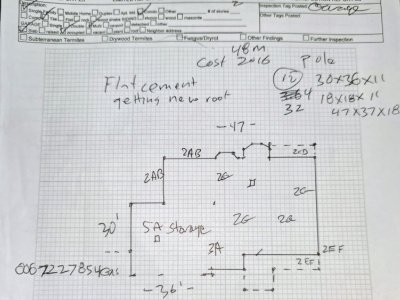
 The graph produced by the termite inspector during a termite inspection becomes the foundation of the official termite report. When the graph is drawn by hand, it is created on a field worksheet.
The field worksheet consists of two pages.
The first page contains spaces for the customer’s name, address, phone number, and email address; the date of the inspection; and the type of report being prepared—complete, limited, supplemental, or reinspection. There are also spaces to indicate where the inspection tag was left, whether inspection tags from other termite companies were present, the type of dwelling, roof, foundation, and siding, and whether the property was occupied or vacant.
Possible findings are listed with checkboxes, including subterranean termites, drywood termites, fungus and dryrot, other findings, and further inspection.
Below this information is the graph. This is where the inspector diagrams the structure and identifies the various areas inspected and any findings discovered. The inspector’s name and license number are listed below the graph.
The second page contains the findings. Companies that use the 1 through 5 numbered inspection system list them in the following order: (1) subterranean termite findings, (2) drywood termite findings, (3) fungus and dryrot, (4) other findings, and (5) further inspection.
Examples of other findings include earth-to-wood contact, excessive moisture, plumbing leaks, and loose toilets. Further inspection generally involves an area that could not be fully inspected because of an obstruction, such as stored belongings in a garage or attic.
The termite industry is segmented. Marketers generate leads. The people answering the phones turn those leads into inspections. Inspectors inspect. They leave chalk marks to tell termite technicians where treatment is needed. The inspector’s field worksheet is then converted into the official termite report by a data-entry person using specialized software.
The completed termite report is shared with the homeowner and the termite technician. For the technician, the report serves as a map to locate the various areas of infestation.
If the structure is fumigated, the termite report provides a timestamp of the condition of the home before fumigation. If the structure is locally treated, the report becomes a record of the treatment and a reference for future inspections. Annual inspectors use the previous inspection report to determine what termite activity is old and what is new, as well as to evaluate the effectiveness of previous treatments.
The more detail recorded on the field worksheet, the better.
For example, if the initial inspector does not identify individual eave wood members—such as fascia, rafter tails, or outriggers—and simply identifies everything as “eaves,” the inspector conducting the annual reinspection may have difficulty determining whether a particular area represents old or new termite activity.
A field worksheet must contain enough information to be understood by someone who was not present during the inspection. It also needs to be legible and organized well enough that a non-licensed data-entry person can accurately transfer the information into the software used to produce the official termite report.
The field worksheet may look like little more than a piece of paper with a drawing on it, but it is the starting point for a surprisingly important chain of information. What the inspector records in the field can affect how a technician treats the structure today and how another inspector evaluates it years later.
Next week: Termite Report Software